

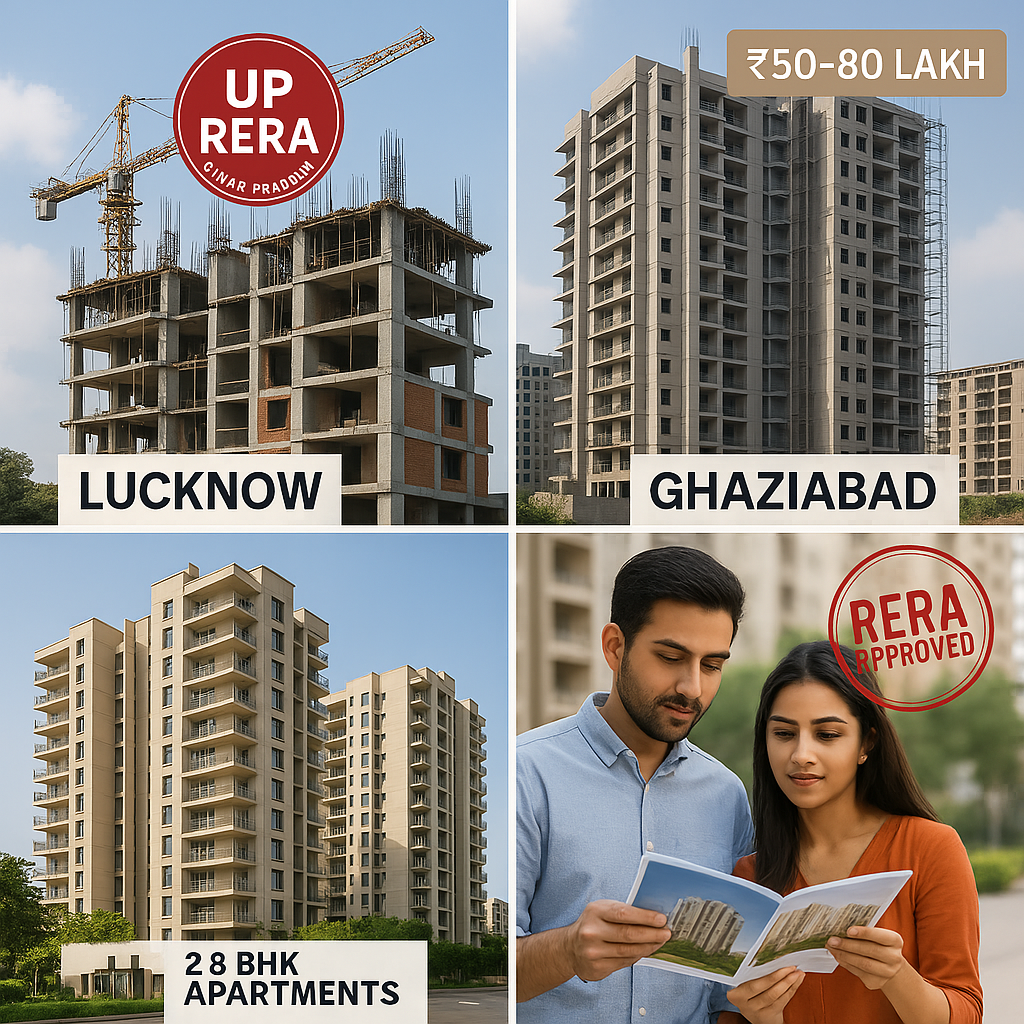

UP RERA Registers 50 New Residential Projects Across Lucknow and Ghaziabad
In a strong push for organized urban housing, the Uttar Pradesh Real Estate Regulatory Authority (UP RERA) has approved 50 new residential projects across Lucknow and Ghaziabad. This strategic move is expected to boost buyer confidence and ensure transparency in property transactions across the state.
These newly registered projects primarily include 2 BHK and 3 BHK apartments, with property prices ranging between Rs 50 lakh to Rs 80 lakh. This pricing bracket is seen as ideal for middle-income families, especially those looking for affordable yet modern housing within urban limits.
The approval from UP RERA guarantees that these projects comply with essential guidelines related to project timelines, legal clearances, developer accountability, and buyer rights. The mandatory registration under RERA also ensures that buyers will receive detailed project information like carpet area, completion schedules, and escrow account usage.
Lucknow, the state capital, is seeing a consistent surge in residential demand due to infrastructure growth, metro connectivity, and increasing employment hubs. On the other hand, Ghaziabad remains a hotspot for NCR homebuyers because of its connectivity to Delhi, expressways, and emerging township developments.
According to UP RERA officials, this registration drive is part of a larger initiative to streamline the real estate sector, protect buyer interests, and encourage only those builders who meet compliance standards.
Real estate analysts believe these new launches will improve supply in the mid-income housing segment, especially in fast-growing urban sectors of both cities. This also provides buyers with more RERA-backed options, reducing the risk of investment and making the real estate market more trustworthy.
With these 50 projects cleared, the state now shows signs of accelerating residential supply in regulated environments, which could potentially lead to improved housing stock, timely possession, and increased market stability.