

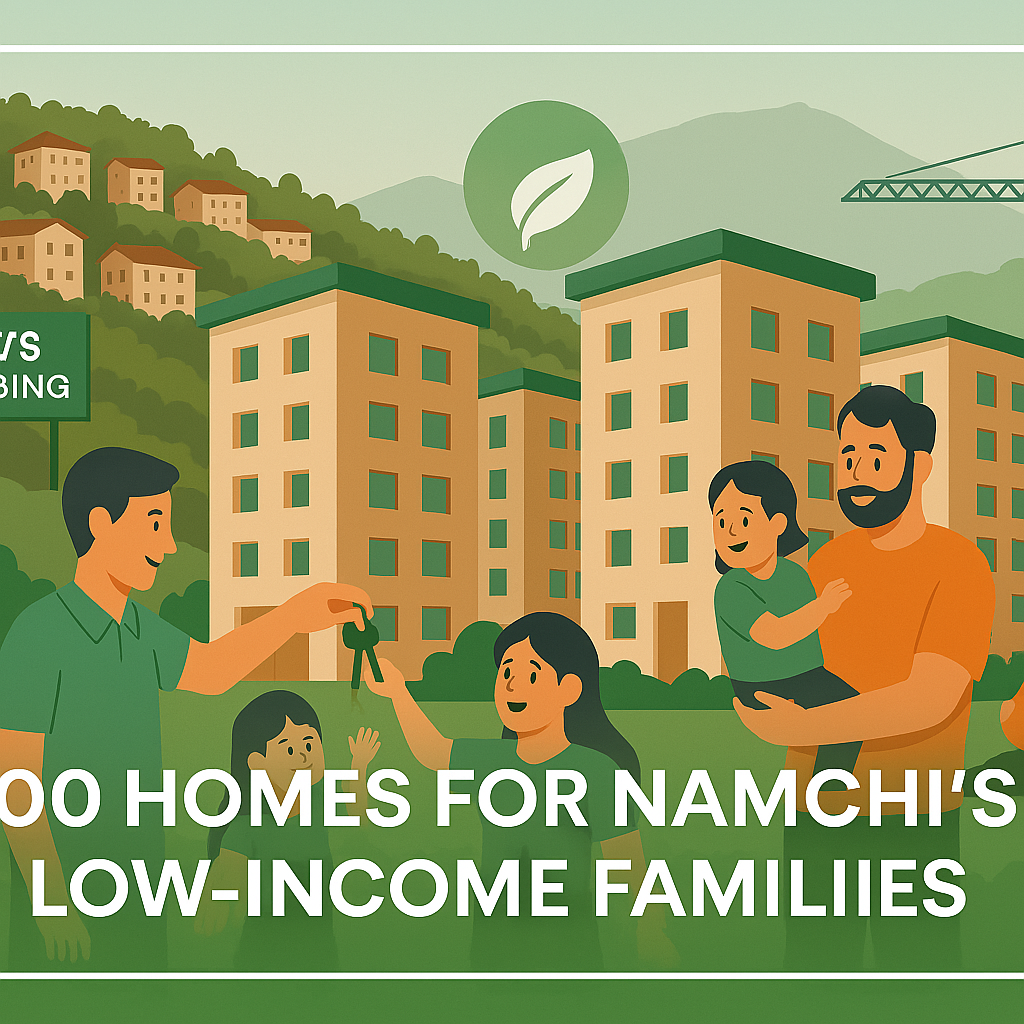

Namchi’s Push for Affordable Housing Gains Ground
In a major step toward inclusive urban development, the Sikkim Housing Board has announced the launch of 1,000 housing units for the Economically Weaker Sections (EWS) in Namchi, the administrative capital of South Sikkim. This initiative aims to address the growing need for affordable homes for low-income families, especially as urbanization expands across the region.
Priced between ₹15–25 lakh, the newly proposed homes are designed with basic amenities and sustainable features. These units are expected to cater to daily wage earners, small vendors, and entry-level government and private employees who have long been priced out of the conventional housing market in the region.
Key Project Highlights:
-
Location: Outer Namchi, with easy access to market areas, schools, and healthcare.
-
Size Range: 1 BHK and compact 2 BHK units between 400–600 sq ft.
-
Pricing: Starting at ₹15 lakh, going up to ₹25 lakh for larger units.
-
Facilities: Water supply, power backup, community halls, and landscaped common areas.
-
Subsidies: Eligible buyers can avail CLSS (Credit Linked Subsidy Scheme) benefits under PMAY (Urban).
Why This Matters:
With rising land prices and increased migration from rural areas, affordable housing has become critical in hill cities like Namchi. This project not only ensures housing security for the underserved but also contributes to urban decongestion in Gangtok and encourages balanced population distribution across districts.
Moreover, the focus on sustainability in construction—including provisions for rainwater harvesting, solar lighting, and eco-friendly materials—aligns with Sikkim’s broader goals of green and inclusive growth.
Community & Economic Impact:
-
Expected to generate local employment during construction and operation.
-
Could serve as a replicable model for other towns like Gyalshing, Pakyong, and Mangan.
-
Aims to promote ownership-based housing, reducing long-term dependence on rentals.
The Sikkim Housing Board has already begun inviting applications and plans to allocate homes through a transparent lottery system, with possession expected in 18–24 months.