

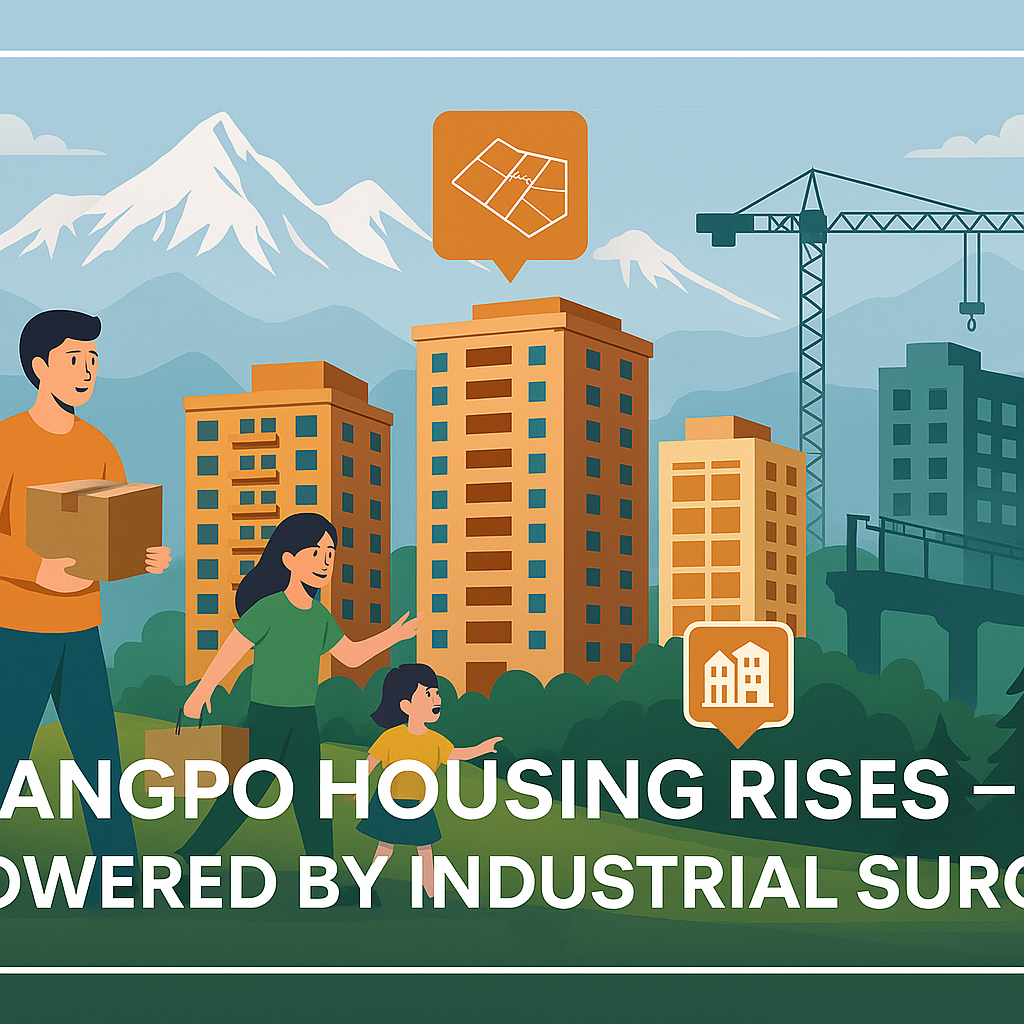

Industrial Boom in Rangpo Triggers Housing Surge
With ₹400 crore pouring into Rangpo’s industrial real estate, the ripple effect is now visible in the residential sector, especially in areas close to the upcoming Sivok–Rangpo railway station. Local developers and authorities report a marked uptick in inquiries for 2–3 BHK apartments and residential plots, particularly from industrial workforce, support staff, and professionals relocating for logistics and factory operations.
The growing appeal of Rangpo as an industrial nucleus has pushed demand for affordable and mid-range housing in nearby neighborhoods such as Majhitar, Tadong Extension, and the Rangpo-Gangtok corridor.
Key Residential Trends:
-
2–3 BHK homes now range between ₹45–70 lakh, depending on proximity to the industrial belt and railway connectivity.
-
Rental demand has surged for small flats and single-room accommodations, targeting workers and junior professionals.
-
Local builders are launching new gated societies and plotted developments focused on affordable pricing and quick possession timelines.
What’s Driving the Residential Interest?
-
Job Creation: Factories, warehouses, and logistics parks coming up in Rangpo are expected to create thousands of jobs, driving housing need.
-
Connectivity Leap: The completion of the Sivok-Rangpo railway will slash travel time to Siliguri, increasing Rangpo’s livability.
-
Social Infrastructure: Educational institutions, hospitals, and retail centers are already being planned around the developing commercial zones.
-
Investor Eye: Property investors from Siliguri, Kalimpong, and even Kolkata are scouting Rangpo as the next growth destination in North-East India.
Local authorities are also working on upgrading municipal services, road infrastructure, and water pipelines to support the expanding population. The government is reportedly planning to create mixed-use zones, ensuring that housing, business, and leisure co-exist in an organized urban model.
This trend not only validates Rangpo’s emergence as a logistics and industrial hub but also points to a broader urban transformation. If the current pace of development continues, Rangpo may soon compete with Gangtok in terms of planned housing ecosystems.